
Why Data-Driven Real Estate Is the Future: Neil Bawa on Multifamily, AI, and the Next Big Investing Opportunity

The Truth About the “Multifamily Crash”
Is the multifamily market crashing?
Not exactly—and according to Neil Bawa, it may actually be one of the best buying opportunities we’ve seen in over a decade.
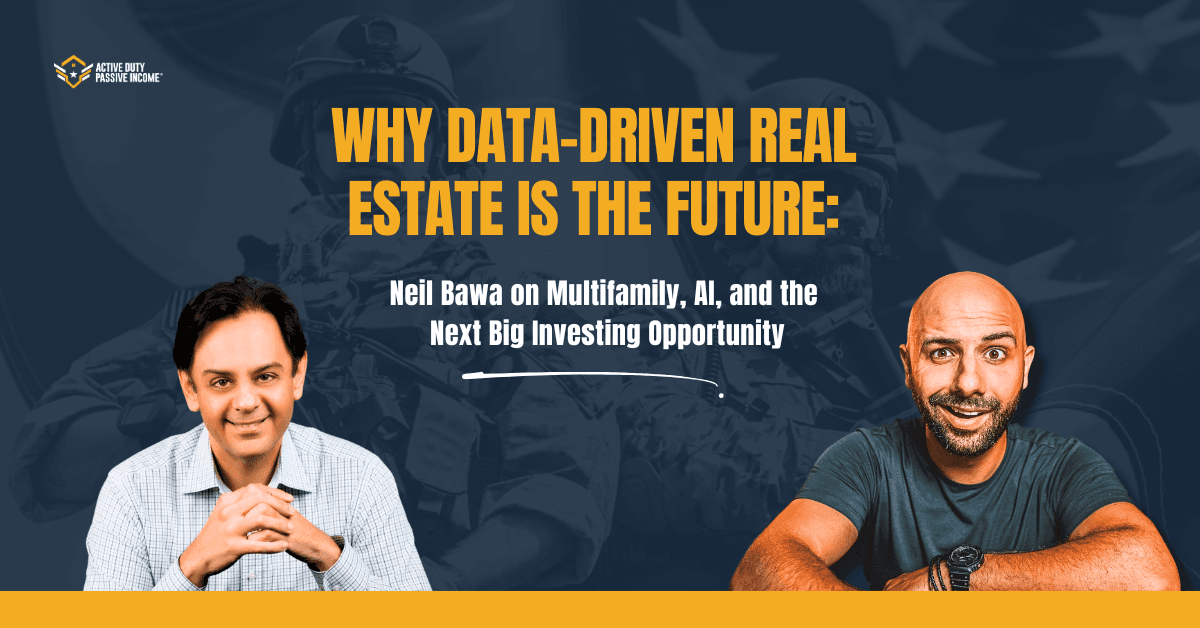
In this episode of the ADPI podcast, host Markian Sich sits down with Neil Bawa—also known as “The Mad Scientist of Multifamily”—to break down what’s really happening in the market, why most investors are reading the signals wrong, and how data is the new currency in real estate investing.
Bawa refers to the current market conditions as an “air pocket.” Here’s what he means:
- Prices are down about 20% from their 2022 peak
- Net operating income (NOI) across the industry has remained stable
- Demand remains strong, with no true market-wide distress
Despite the price decline, Bawa reveals that his team made 33 offers on properties in the past year—and lost every single one. Why? Because the competition is still intense. There may be individual distressed deals, but there is no widespread fire sale.
His takeaway: Price drops without distress create an ideal entry point for savvy investors.
The Danger of Gut-Based Investing
A recurring theme in the conversation is Bawa’s push to eliminate guesswork from investing. His personal story begins in 2008, when he was ignored by successful family members who dismissed his forecasts about the market rebound. Why? They relied on gut feelings—not data.
So Bawa created a system using real metrics from sources like:
- Bureau of Labor Statistics (BLS.gov)
- Zillow
- RealPage
- Local demographic and housing data
With this, he developed the “Location Magic Toolkit,” a repeatable method to rank cities and neighborhoods by objective performance indicators like:
- Population and job growth
- Household income trends
- Home price trends
- School quality
- New housing supply
He turned that framework into a free, highly-rated Udemy course and teaches thousands of investors how to approach real estate like a data scientist.
The Top Market to Watch in 2025: Indianapolis
When asked which city offers the best investment upside today, Bawa’s answer may surprise some investors: Indianapolis.
But not just any part of Indianapolis—specifically the northeast quadrant, including Fishers, Carmel, and Noblesville.
Why this area?
- Strong population and job growth
- Institutional capital starting to enter the market
- Rents still undervalued relative to national trends
- Clear “path of progress” for long-term appreciation
Bawa explains that in nearly every major metro, growth follows a specific path—often concentrated in one geographic corridor. Identifying that path early is critical to finding outsized returns.
The Hidden Boom: Data Centers and AI
While multifamily remains a cornerstone of real estate investing, Bawa also reveals what he believes is the next major wave: data centers.
The reason is simple: AI adoption is exploding, and the infrastructure needed to support it—compute power, energy, and storage—is grossly underbuilt.
Key points from the discussion:
- AI will require 3–5 times more computing power within the next five years
- Most companies are unprepared for the infrastructure needs
- Tech giants like Microsoft and Amazon are already buying power plants
- Real estate tied to data infrastructure (industrial land, energy-efficient assets) will likely see dramatic value increases
He compares this moment to the early days of the internet—except this time, the demand for space, electricity, and compute power is even more aggressive.
Summary: Key Takeaways from the Episode
- Market-wide distress is a myth—multifamily is in a pricing “air pocket,” not a crash
- Data-driven investing dramatically outperforms instinct-based decisions
- Class A rent concessions are creating short-term income dips but long-term upside
- Indianapolis, especially the northeast quadrant, is positioned for strong growth
- AI will transform not just technology, but real estate—especially through data centers
Final Thoughts
This conversation between Neil Bawa and Markian Sich serves as both a wake-up call and an education. For military and civilian investors alike, it reinforces that the future of real estate investing isn’t about guesswork—it’s about data, systems, and spotting the wave before it breaks.
If you’re ready to level up your investing knowledge and network with like-minded investors, consider joining ADPI Campus. You’ll gain access to expert-led training, resources, and a community dedicated to building wealth through real estate.
Want help running your first deal?
Apply for a free strategy session and we'll map your VA-loan house-hack to your situation — no pressure, just clarity.
Book a free strategy session