Why SEC Compliance is Non-Negotiable in Real Estate Syndication
Syndication is one of the most powerful ways to scale a real estate business. By pooling investor capital, you can take down larger deals, increase your cash flow, and build a real estate portfolio faster than going it alone.
But if you don’t understand the legal rules around raising money, you may be violating securities laws without even realizing it.
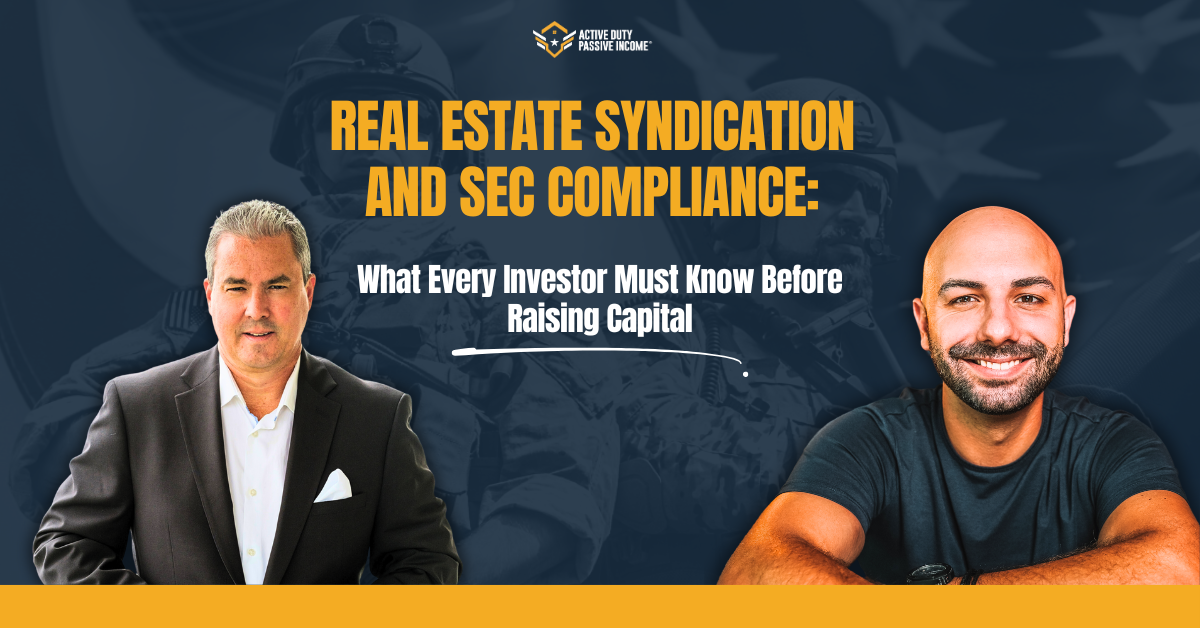
In this episode of the ADPI Podcast, Mauricio Rauld, one of the country’s top syndication attorneys, shares what every real estate investor needs to know about raising capital legally, ethically, and confidently.
What Is a Real Estate Syndication?
A syndication is the process of pooling money from multiple investors to buy a real estate asset. It could be a 100-unit apartment complex, a mobile home park, a campground, or even a portfolio of single-family homes.
Mauricio explains that many people mistakenly believe syndication only applies to large-scale, multimillion-dollar deals. But even small joint ventures or promissory notes can fall under the definition of a “security” if one party is passive.
“Promissory notes, joint ventures—if someone is giving you money and you’re doing the work, that’s likely a security. And if it’s a security, it falls under SEC regulations.”
The Compliance Gap That Gets Investors in Trouble
One of the biggest mistakes investors make is unknowingly crossing legal lines before they ever hire a securities attorney. Mauricio calls this phase the “compliance gap”—a dangerous space where real estate operators often violate laws simply because they don’t know what they don’t know.
Examples include:
- Promoting a deal on social media
- Emailing potential investors before having proper documentation
- Accepting money from friends or family without disclosures
- Assuming that a joint venture exempts you from SEC oversight
“The most dangerous part of the process is before you even hire an attorney. That’s where most violations occur—often unintentionally.”
Understanding 506(b) vs. 506(c) Offerings
These are the two most common SEC exemptions for raising capital:
506(b) Exemption
- You can raise an unlimited amount of capital
- You may accept up to 35 non-accredited investors
- You cannot advertise or solicit publicly
- You must have a prior, substantive relationship with all investors
506(c) Exemption
- You can also raise an unlimited amount of capital
- You may advertise your offering publicly
- You must accept only verified accredited investors
- You must take reasonable steps to verify investor status
This decision must be made before you start raising capital. You cannot start with 506(c) and later include non-accredited investors. However, there are strategies to start with 506(b) and pivot to 506(c), if structured correctly from the beginning.
“Once you publicly advertise a deal, you’ve crossed into 506(c) territory—and that means no non-accredited investors can participate.”
What is a PPM and Why It Matters
A PPM, or Private Placement Memorandum, is a disclosure document that outlines every detail of your investment offering, including the risks involved. It’s a critical legal safeguard for both you and your investors.
The PPM should include:
- The structure of the deal
- Use of investor funds
- Projected returns
- Risk factors and market conditions
- Management responsibilities
- Exit strategies
“Think of a PPM like a medical consent form. It outlines all the risks and ensures everyone knows what they’re getting into.”
The REI Framework: Register, Exemption, or Illegal
Mauricio breaks down compliance into three options:
- Register with the SEC — extremely rare for private investors due to time and cost.
- Claim an Exemption like 506(b) or 506(c).
- Operate Illegally — which is what happens when investors raise capital without understanding the rules.
This framework simplifies the legal landscape. You don’t need to be a legal expert—but you do need to hire one before you begin taking money from others.
“You have three choices: Register, find an Exemption, or it’s Illegal. That’s it. That’s the entire game.”
Building the Right Team Is Key
Successful syndicators are not legal or tax experts—they’re deal-makers and team builders. Your job is to assemble the right people: lenders, attorneys, property managers, and investor relations professionals.
For legal compliance, your SEC attorney should help you:
- Select the right exemption
- Draft your PPM and operating agreement
- Create subscription documents and investor questionnaires
- Set up proper LLCs or syndication entities
“As a sponsor, you’re the quarterback. You don’t need to know everything about securities law—you just need the right people around you.”
About Mauricio Rauld and Platinum Legal Consulting
Mauricio Rauld is the founder of Platinum Legal Consulting and a nationally recognized expert in syndication and securities law. He’s helped hundreds of investors legally raise capital through real estate syndications.
In addition to legal services, he offers a mentorship program—the Elite Syndicator Academy—designed to help real estate professionals confidently raise capital, build their brand, and grow their business.
You can find Mauricio at:
Final Thoughts
Raising capital is one of the most powerful and scalable ways to grow your real estate portfolio—but if done wrong, it can destroy your reputation or worse. By understanding the rules and working with the right professionals, you can confidently raise money, serve your investors, and build long-term wealth.
If you’re serious about growing your real estate business through syndications, compliance isn’t optional—it’s essential.
Interested in investing in commercial real estate?
Schedule a Free Strategy Call Here